

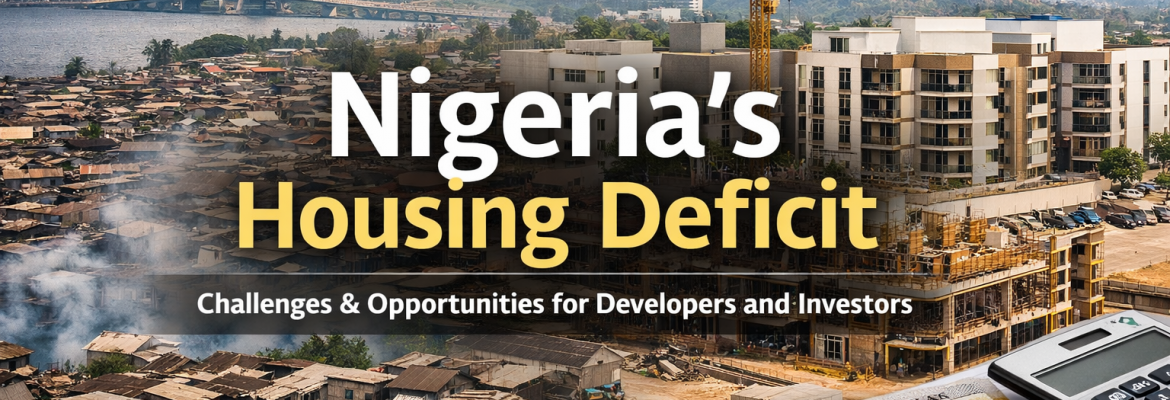
Nigeria’s housing sector sits at the centre of one of the country’s most pressing socio-economic challenges: a massive shortage of adequate housing. Over the past two decades, rapid population growth, urbanisation, and rising construction costs have combined to create a widening gap between housing demand and supply. Today, Nigeria’s housing deficit is estimated to be well above 14 million units, making it one of the largest housing shortages in the world.
While the deficit reflects a serious national challenge, it also signals a powerful market dynamic. For developers and investors, the gap between supply and demand represents both an opportunity and a complex environment that requires careful strategy, sound project planning, and strong market insight.
A Market Driven by Demand
Nigeria’s population continues to grow at a significant rate, and the country is projected to become one of the most populous nations in the world within the next few decades. This demographic reality is closely tied to the housing crisis. Every year, hundreds of thousands of new households are created, yet the number of new homes delivered falls far short of what is required. Urban centres such as Lagos, Abuja, and Port Harcourt have become focal points of this imbalance. As people migrate to these cities in search of economic opportunities, demand for residential accommodation continues to rise. The pressure this places on housing supply is evident in the steady increase in property prices and rental costs. For developers, this demand signals a market that is unlikely to slow down anytime soon. The need for housing is not speculative, it is structural and driven by demographic realities. Developers who are able to position themselves strategically within this demand cycle have the potential to benefit from a market that will remain active for decades.
The Untapped Affordable Housing Segment
One of the most striking characteristics of Nigeria’s housing deficit is that the greatest demand exists within the affordable housing segment. A significant portion of the population cannot afford high-end residential properties, yet the supply of affordable housing remains limited. This imbalance presents both a challenge and an opportunity for developers. On one hand, delivering affordable housing requires innovative thinking around cost control, construction efficiency, and financing structures. On the other hand, the size of this market segment means that developers who can successfully deliver cost-effective housing solutions may find themselves serving one of the largest real estate markets in Africa. Increasingly, forward-thinking developers are exploring new construction methods, alternative building materials, and more efficient project delivery models to reduce costs while maintaining quality. These innovations are gradually reshaping how housing projects are planned and delivered.
The Investor Perspective
From an investment standpoint, Nigeria’s housing deficit represents a compelling long-term proposition. Demand for residential properties continues to grow, and this demand translates into both rental income potential and capital appreciation. In many Nigerian cities, rental markets remain strong due to the limited availability of housing relative to the number of people seeking accommodation. Properties located in well-planned estates or strategic urban corridors tend to achieve high occupancy rates and stable rental returns. Land banking has also become a common strategy among investors who recognize that urban expansion will continue to push property values upward over time. Areas that are considered peripheral today may become major residential hubs in the future as infrastructure improves and city boundaries expand. However, successful real estate investment in Nigeria requires more than simply acquiring property. Investors must carefully evaluate location dynamics, infrastructure availability, and long-term urban development trends before committing capital.
The Structural Challenges
Despite the enormous potential within Nigeria’s housing market, several structural challenges continue to affect both developers and investors. One of the most significant issues is the high cost of construction. Fluctuating exchange rates, inflation, and dependence on imported building materials often increase the cost of delivering housing projects. These costs inevitably affect property pricing, which can place home ownership beyond the reach of many Nigerians. Another critical challenge is the limited availability of housing finance. Mortgage penetration in Nigeria remains relatively low compared to global standards. Many potential homeowners are unable to access long-term financing, forcing them to rely on outright payments or incremental building methods. Land administration also presents hurdles. Obtaining land titles, development permits, and regulatory approvals can be a lengthy and complex process. For developers, delays in these areas can significantly affect project timelines and overall development costs. Infrastructure is another key consideration. In many cases, developers must provide essential infrastructure such as internal roads, drainage systems, water supply, and electricity within their estates. While this improves the quality of developments, it also increases project costs.
Why Strategy Matters
Given these realities, developers and investors cannot approach Nigeria’s housing market with a purely opportunistic mindset. Success requires a strategic approach that balances market demand with practical delivery considerations. Projects that integrate thoughtful design, realistic cost planning, and effective project management are more likely to succeed. Equally important is the ability to identify locations where population growth, infrastructure expansion, and economic activity intersect. Developers who adopt a long-term perspective rather than focusing solely on short-term profits are often better positioned to navigate the complexities of the housing market.
Looking Ahead
Nigeria’s housing deficit will not disappear overnight. Closing the gap will require coordinated efforts from government, private developers, financial institutions, and infrastructure providers. Policy reforms, improved housing finance systems, and innovative construction approaches will all play critical roles in expanding housing supply. For developers and investors, the key takeaway is clear: Nigeria’s housing challenge is also one of the country’s largest economic opportunities. The scale of the deficit means that the demand for residential development will remain strong for many years. In this environment, the role of professional project planning, cost management, and structured development oversight becomes increasingly important. At Samprec Consultants Ltd, we contribute to this process by providing the project management and construction advisory expertise required to guide housing developments from concept to completion, ensuring that projects are delivered efficiently and in line with investor expectations. Ultimately, Nigeria’s housing deficit is more than a statistic—it is a reflection of a rapidly evolving real estate market. For those willing to approach it with the right strategy and expertise, it represents one of the most significant development opportunities in the country’s built environment sector.